Avi Bagchi, Akhil Bhimaraju, Moulik Choraria, Daniel Alabi, and Lav R. Varshney

Watermarking has emerged as a promising technique to track AI-generated content and differentiate it from authentic human creations. While prior work extensively studies watermarking for autoregressive large language models (LLMs) and image diffusion models, none address discrete diffusion language models, which are becoming popular due to their high inference throughput. We introduce the first watermarking method for discrete diffusion models by applying the distribution-preserving Gumbel-max trick at every diffusion step and seeding the randomness with the sequence index to enable reliable detection.
Under submission. Presentation to UIUC Information and Intelligence Group.
Avi Bagchi, Dwight Hutchenson

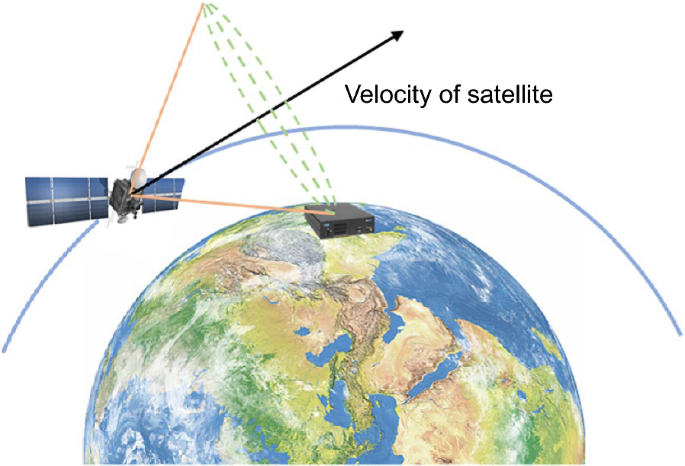
Radio spectrum monitoring in contested environments motivates the need for reliable automatic signal classification technology. Prior work highlights deep learning as a promising approach, but existing models depend on brute-force Doppler augmentation to achieve real-world generalization, which undermines both training efficiency and interpretability. In this paper, we propose a convolutional neural network (CNN) architecture with complex-valued layers that exploits convolutional shift equivariance in the frequency domain. To establish provable frequency bin shift invariance, we use adaptive polyphase sampling (APS) as pooling layers followed by a global average pooling layer at the end of the network. Using a synthetic dataset of common interference signals, experimental results demonstrate that unlike a vanilla CNN, our model maintains consistent classification accuracy with and without random Doppler shifts despite being trained on no Doppler-shifted examples. Overall, our method establishes an invariance-driven framework for signal classification that offers provable robustness against real-world effects.
Under submission. Full report & slides internally distributed at MIT Lincoln Labs.
Avi Bagchi
Senior Thesis under Professors Weijie Su and Surbhi Goel
Avi Bagchi, Sourya Basu, Akhil Bhimaraju, Moulik Choraria, Daniel Alabi, and Lav R. Varshney
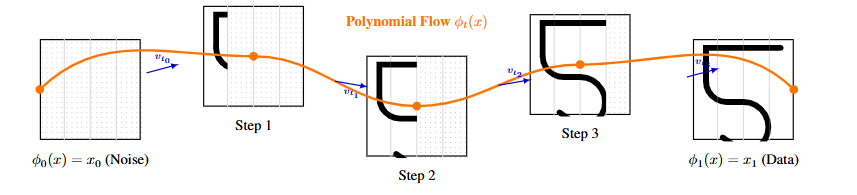
Extension of “Flow Matching for Generative Modeling” (Lipman et al. 2022)
Avi Bagchi, Om Shastri
Extension of “Diffusion Factor Models: Generating High-Dimensional Returns with Factor Structure” (Chen et al. 2025)
Avi Bagchi

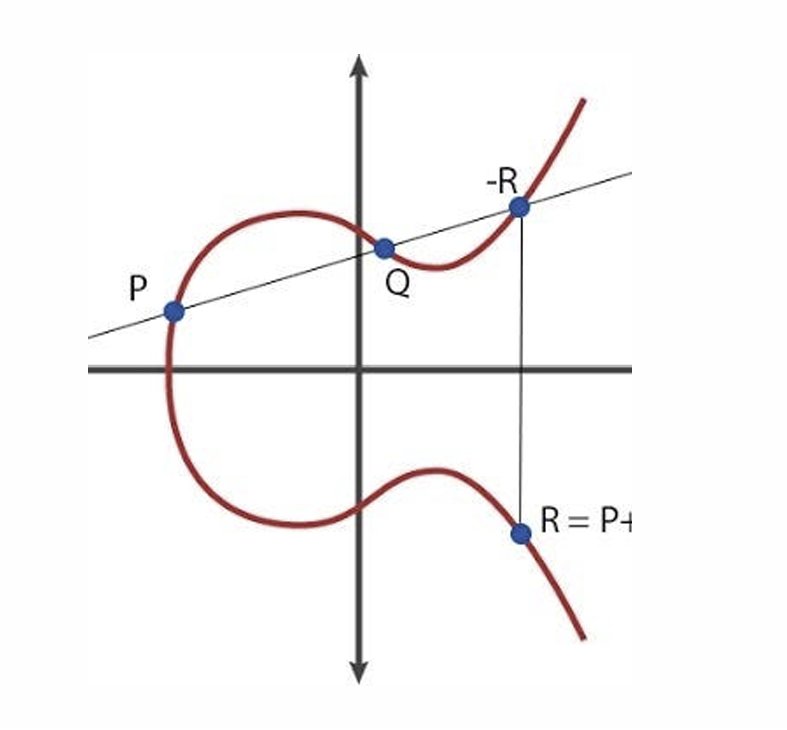
Directed Reading Program. Research on elliptic curve cryptography and its applications.
Presentation to Penn Department of Mathematics
Johann D. Gaebler, Sharad Goel, Aziz Huq, and Prasanna Tambe
I was acknowledged for my research assistance at The Wharton School (Operations, Information, and Decisions Department) under Professor Prasanna Tambe in this work.
Shyam Polineni†, Om Shastri†, Avi Bagchi†, Govind Gnanakumar†, Sujay Rasamsetti†, Prabha Sundaravadivel
† Equal contribution

Species distribution models (SDMs) using climate variables effectively predict mosquito niches under current and future conditions. We use NOAA climate data matched to mosquito presence and absence points from NASA’s GLOBE Observer and the National Ecological Observatory Network to train an 86%-accurate Random Forest classifier that predicts mosquito threat. Temperature increases threat up to about 28 °C, producing high-threat clusters in warm, humid regions and low-threat clusters in cold, dry ones. We develop a low-cost IoT edge device that collects local climate data and automatically queries the model, enabling real-time predictions in remote or resource-limited settings and supplying new data for future SDM training.
Published in Sensors (2022). Cited 14.
Avi Bagchi

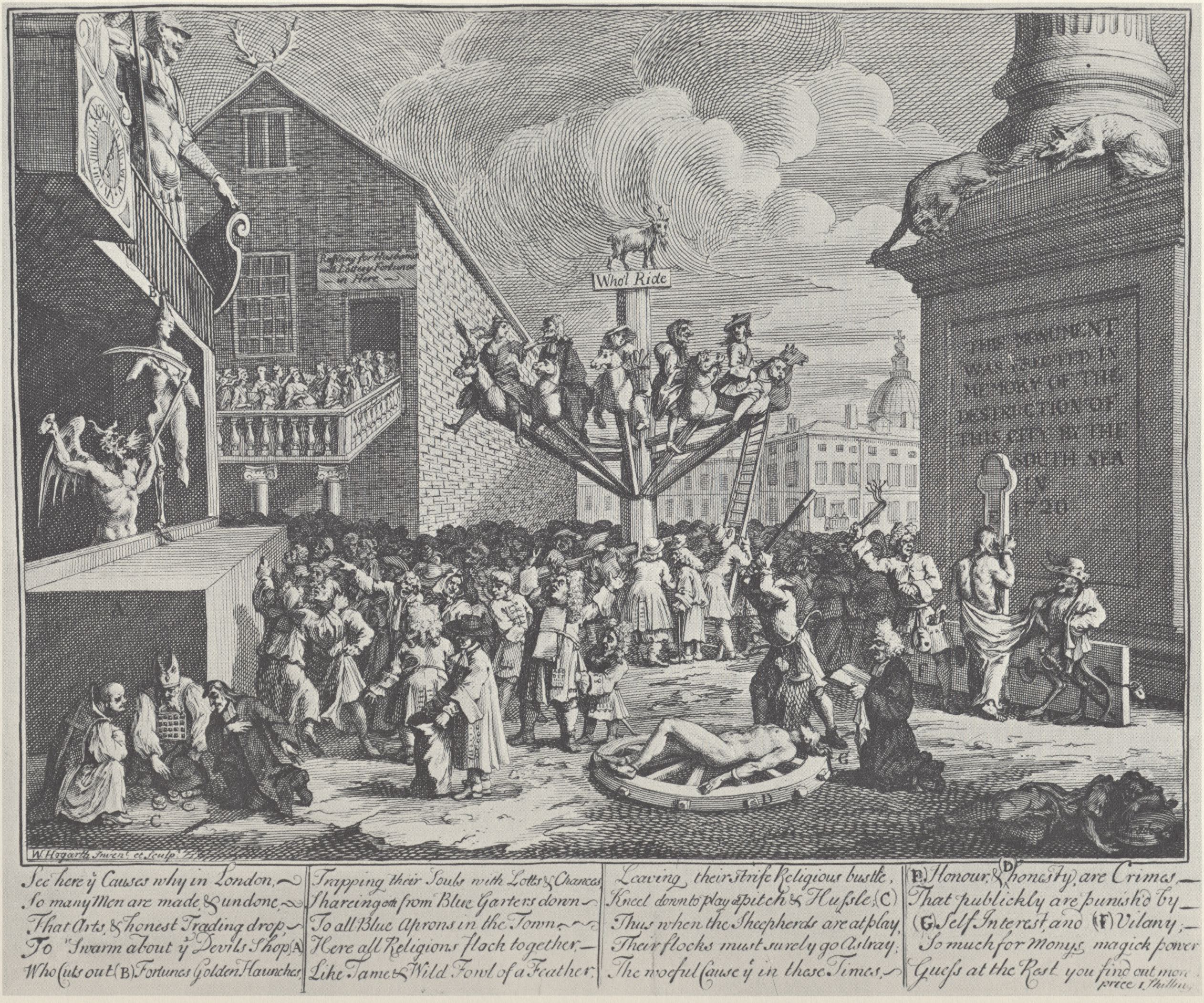
“I can calculate the motions of heavenly bodies, but not the madness of people.” —Isaac Newton
Through an investigation within the British Archives, this paper uncovers the British government’s corrupt involvement in the fraudulent South Sea Company.
Published in The Concord Review (a premier international history journal)
Avi Bagchi

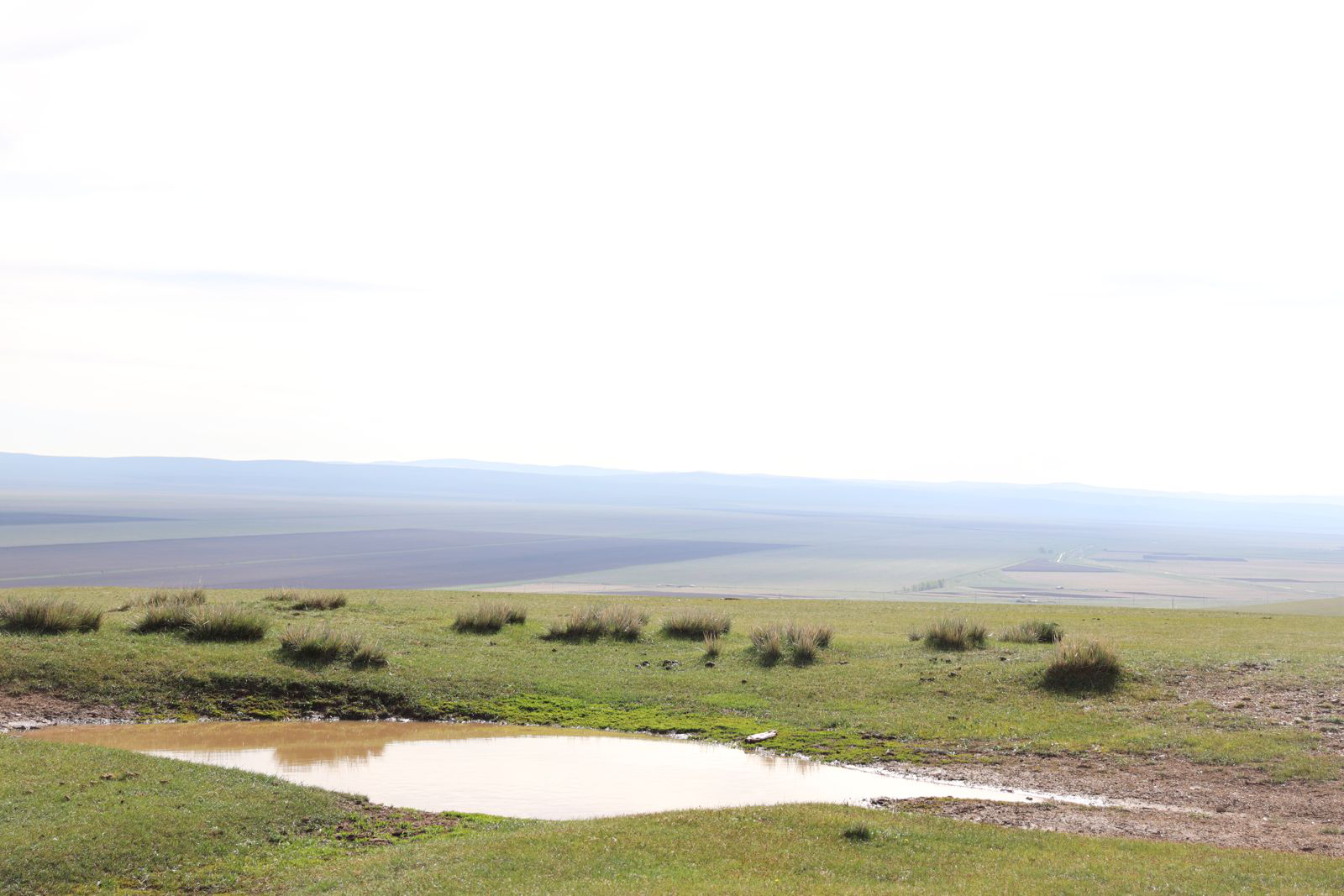
Photo taken in Mongolia (Penn Global Seminar 2025) where I continued water insecurity research.
Institutional fragmentation, contested borders, and “ninja mining” threaten water insecurity in Uzbekistan and Mongolia.
Published in The Global Youth Institute World Food Prize Conference. Cited 1.